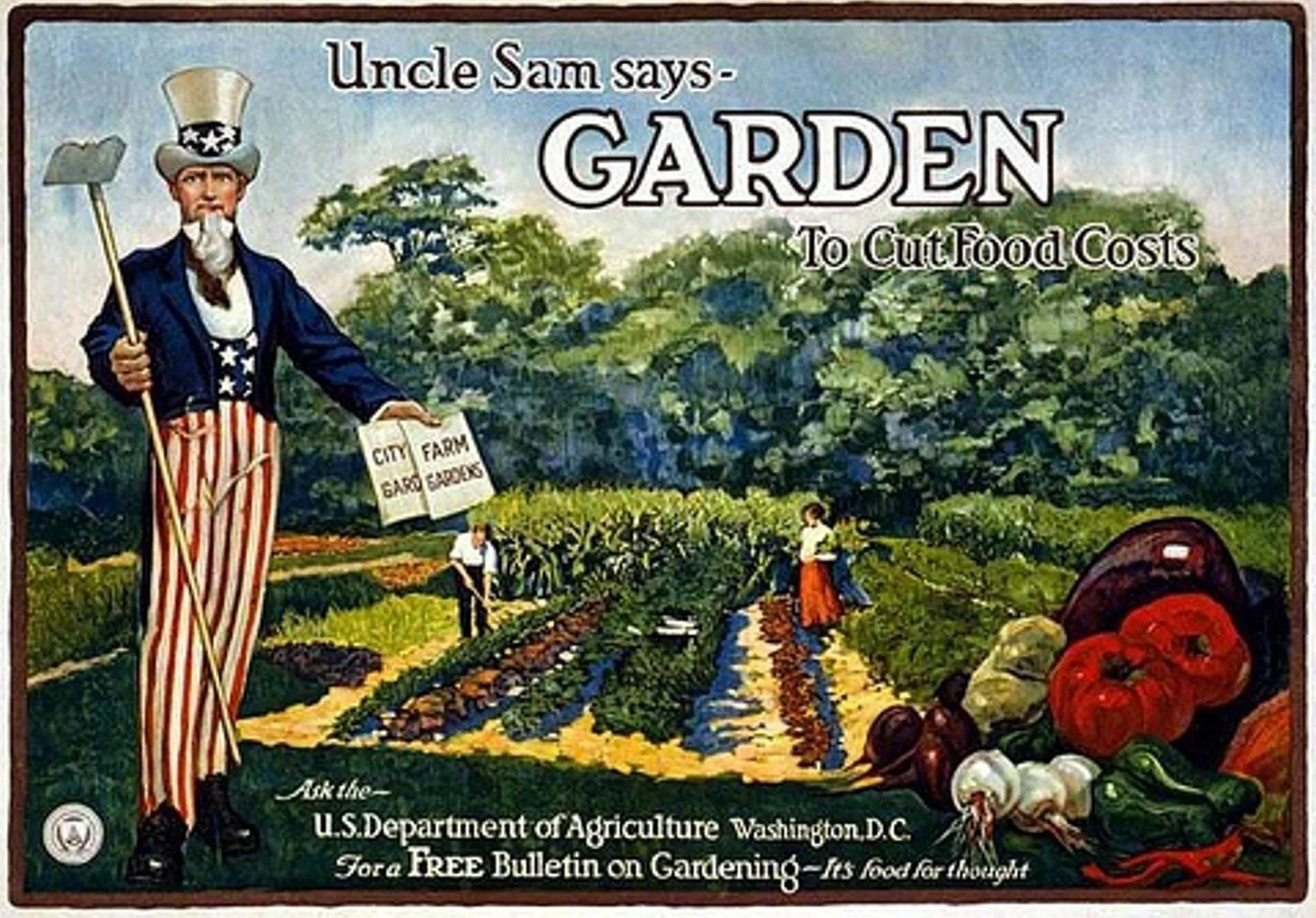
Recent global trends are bringing the idea of a country feeding itself back into sharp focus in public policy and community action. Yet the idea of a country feeding its own people is hardly new. Food self-sufficiency and food self-reliance were once central to development thinking in the 1960s and 1970s, particularly in the Caribbean, before falling out of favour with the rise of globalization and neoliberalism. Today, the terms have returned to policy and academic debates. But what do they mean? In this post, I unpack the concepts of food self-sufficiency and food self-reliance, how they differ and their relevance in the current global context.
What Is Food Self-Sufficiency?
Food self-sufficiency traditionally refers to the extent to which a nation can meet its own food needs through domestic production. In its simplest application, a self-sufficient country produces as much food as it consumes, measured, for example, by calories or the volume of staple foods, and does not rely on imports to meet basic consumption requirements.
In policy and academic circles, self-sufficiency is often discussed on a continuum rather than as an absolute goal of a country producing all of its own food. Jennifer Clapp outlines that rather than a binary condition of “self-sufficient” vs. “import dependent,” countries can be placed at varying points along a spectrum according to how much of their food supply is generated domestically. This perspective allows for more nuanced analysis of when and how increasing domestic production can make sense politically, economically, and geographically.
Food self-sufficiency can be framed as an indicator of food security, with the rationale that countries producing a larger share of their own food may be better shielded from global price volatility and supply disruptions. Yet self-sufficiency alone does not guarantee food security because it does not directly address other dimensions like affordability or nutrition.
What Is Food Self-Reliance?
Food self-reliance relates to the concept of self-sufficiency but emphasizes capacity and agency rather than simple production ratios. Self-reliance broadly implies the ability of a community or nation to satisfy its food needs through its own production, distribution, cultural practices, and institutional supports without undue dependence on external sources.
The concept of food self-reliance has explicit roots in the Caribbean. Emerging in the post-independence period, it reflected a broader political economy response to the region’s colonial history, plantation economies reliant on enslaved labour, and structural dependence on external markets. Caribbean thinkers such as Norman Girvan, George Beckford and Lloyd Best alongside political leaders like Michael Manley, articulated self-reliance as a development principle centred on domestic capacity, regional integration, and reduced vulnerability to external shocks, not as isolationism, but as a strategy for greater autonomy within an unequal global system. In the context of food systems, this framing emphasized strengthening domestic production and distribution, valuing local food cultures, and sustaining livelihoods, even as Caribbean economies remained deeply embedded in global trade rooted in colonialism.
Food self-reliance can be framed at various scales, including within communities, emphasizing the ability to satisfy food needs from local or regional sources. This puts greater emphasis on the role of localized systems, community engagement, and adaptive capacity, recognizing that food provisioning is not solely about aggregate production volumes but about the structures that enable food access and agency.
Contrasting the Concepts
Although related, self-sufficiency and self-reliance have distinct implications:
Self-sufficiency tends to be quantitative and production oriented, measuring domestic output relative to consumption. It is often incorporated into national policy targets and food security indices.
Self-reliance is qualitative and capability oriented, capturing broader dimensions of capacity to sustain food systems locally including social norms, diversified production, distribution networks, and institutional support.
In academic and policy debates, distinguishing these concepts matters because they shape different strategies. A self-sufficiency focus might prioritize boosting domestic crop yields, while a self-reliance approach might emphasize strengthening local food networks, diversifying production, and building community capacity.
A Nation Feeding Itself in 2026?
The relevance of these concepts is resurfacing in a global context marked by geopolitical tensions, supply chain disruptions, and climate change impacts. Many countries are re-examining their reliance on global food imports and exploring how to bolster domestic food systems as part of broader resilience strategies, whether through targeted production policies, investments in agricultural infrastructure, or support for community-level food networks.
This renewed focus reflects a broader shift in thinking about food systems: away from the assumption that globalized trade alone will ensure reliable food access, and toward a more balanced understanding of how domestic production, local capacity, and global linkages together shape food security and resilience in an uncertain world.