In the previous post, I outlined the concepts of food self-sufficiency and food self-reliance, emphasizing the importance of distinguishing between production-based metrics and broader questions of capacity, agency, and resilience. This post turns to Jamaica’s domestic food system as a concrete illustration of these ideas and shows that food self-reliance is not a newly revived concept, but one that has deep intellectual, political, and historical roots in the Caribbean, with distinct relevance for today.
Jamaica’s Domestic Food System Beyond Production Metrics
By conventional measures of food self-sufficiency, Jamaica can be characterized as food import dependent. A significant share of calories consumed nationally comes from imported staples, and this fact frequently dominates Western academic narratives. Yet such assessments obscure the continued significance of Jamaica’s domestic food system and its role in sustaining livelihoods, food access, and cultural foodways.
As I argue in my dissertation, Jamaica’s domestic food system, rooted in small-scale farming, informal and semi-formal marketing networks, and culturally embedded food preferences, persists not because it fully replaces imports, but because it fulfills functions that global supply chains do not. Domestic production supplies fresh foods to local markets, supports rural and peri-urban livelihoods, and provides flexibility in moments of economic or supply disruption. In this sense, Jamaica may fall short of food self-sufficiency, but it demonstrates a strong degree of food self-reliance.
This distinction matters. A narrow focus on self-sufficiency can frame Jamaica’s food system as deficient, while a self-reliance lens reveals a system that is adaptive, socially embedded, and responsive to local needs, even under conditions of structural constraint.
Self-Reliance as a Lived Practice, Not an Ideal State
Jamaica’s food system exemplifies food self-reliance as a process rather than an endpoint. Farmers, vendors, and consumers continuously negotiate between domestic and imported foods, drawing on local production where it is available, affordable, and culturally valued. Informal distribution channels such as roadside vendors, local markets, and community networks play a critical role in moving food from producers to consumers, often filling gaps left by formal retail systems.
This dynamic highlights an important insight from the first post: food self-reliance is not about isolation from global markets, but about maintaining the capacity to provision food through domestic systems when global systems are volatile, inaccessible, or misaligned with local needs. Jamaica’s domestic food system embodies this capacity, even as it coexists with high levels of food imports.
The Caribbean Origins of Food Self-Reliance
The concept of food self-reliance did not emerge in a vacuum. In the Caribbean, it developed as both an analytical framework and a political project shaped by colonial histories, plantation economies, and post-independence development struggles. Caribbean scholars and policymakers grappled early with the vulnerabilities created by dependence on imported food and export-oriented agriculture, long before similar concerns gained traction in global food systems debates.
Food self-reliance in the Caribbean was closely tied to broader calls for economic sovereignty, cultural affirmation, and regional integration. It emphasized strengthening domestic production, valuing local food cultures, and reducing structural dependence, not necessarily by eliminating imports, but by re-centering domestic capacity within national and regional development strategies. In this context, self-reliance was as much about sovereignty as it was about food.
Jamaica’s domestic food system reflects this legacy. The persistence of smallholder farming, local markets, and culturally specific food preferences can be understood as expressions of Caribbean self-reliance—shaped by history, constrained by global economic structures, yet continually reproduced through everyday practices.
Why Jamaica Matters for Contemporary Food Policy Debates
As countries around the world revisit national food strategies in response to supply chain shocks, climate change, and geopolitical uncertainty, Jamaica’s experience offers an important lesson. Food system resilience does not hinge solely on achieving high levels of self-sufficiency. It also depends on maintaining domestic systems that can adapt, endure, and respond to local realities.
By examining Jamaica through the lens of food self-reliance, we gain a richer understanding of how domestic food systems function under conditions of constraint, and why they remain relevant even in highly globalized food economies. In doing so, Caribbean experiences challenge dominant narratives and remind us that some of today’s “new” food system debates have long been part of the region’s intellectual and political history.
Jamaica’s experience reminds us that domestic food systems can matter deeply even when they do not deliver full self-sufficiency. As governments around the world revisit inward-focused food strategies, often framed in increasingly nationalist terms, the Jamaican case offers a useful lens for thinking about what food self-reliance looks like in practice, such as the everyday functioning of domestic production, informal and formal distribution networks, culturally embedded food preferences, and the institutional supports that allow these systems to persist alongside global trade.
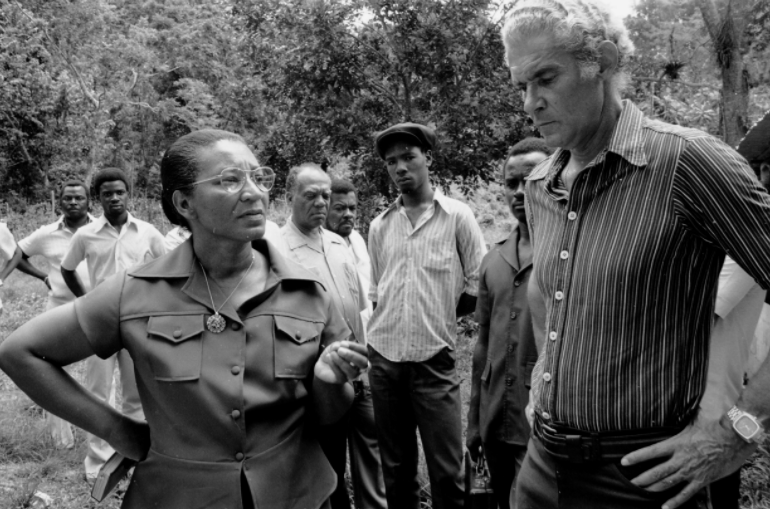
Image source: Jamaica Information Service