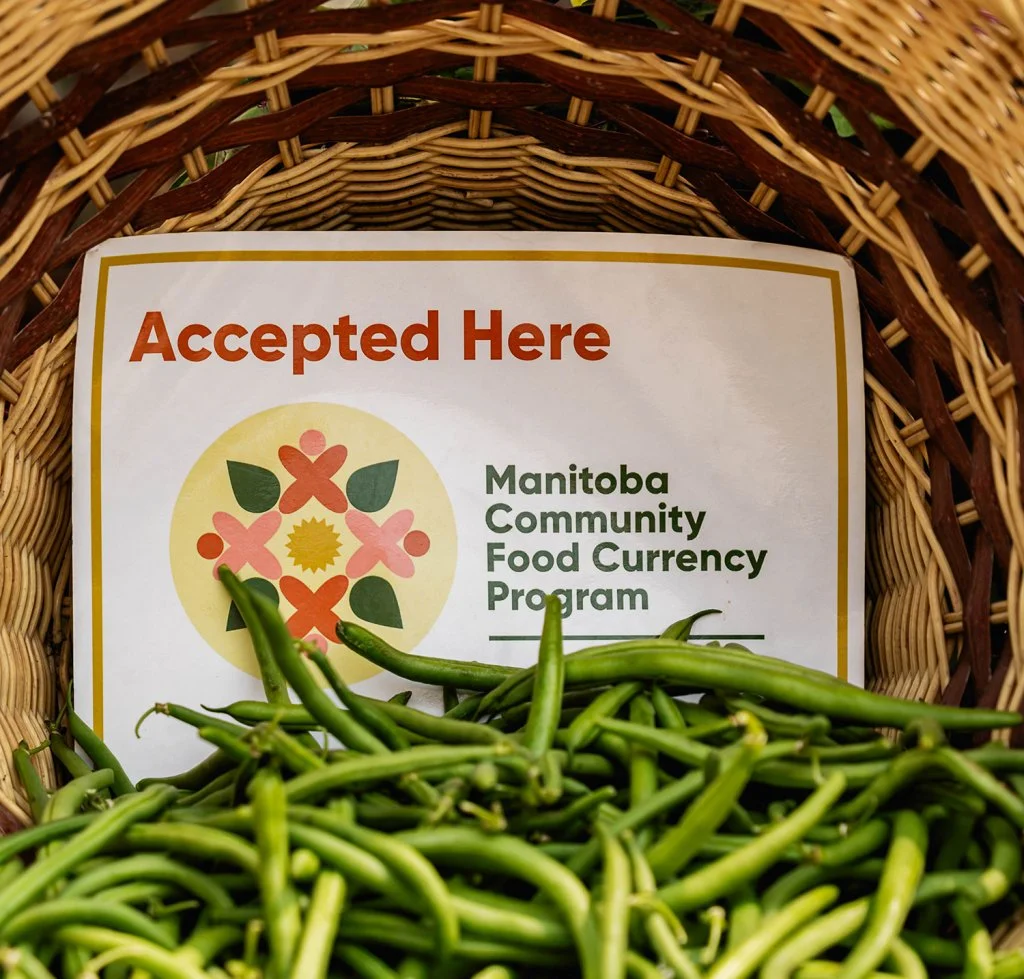
In previous posts, I’ve written about food self-sufficiency and food self-reliance as concepts that are re-emerging in Canadian policy debates. But if we shift from concepts to practice, there are already examples of such programs quietly operating across the country. One of the most effective, evidence-based, and locally grounded approaches to improving food security in Canada today are farmers’ market voucher programs.
How The Programs Work
At their core, farmers’ market voucher programs connect three things that are too often treated separately: households experiencing food insecurity, local farmers, and community-based organizations.
Farmers’ market organizations partner with trusted local agencies, such as health centres, social service providers and community groups to identify individuals and families who would benefit from better access to healthy food. Participants receive vouchers that can be redeemed directly at local farmers’ markets for fresh produce and other foods.
Vouchers are accepted by vendors like cash, then reimbursed through the market, ensuring that 100% of the program’s value flows directly to local farmers and producers. Programs are structured to reduce stigma, protect privacy, and in some cases even address transportation barriers to market access.
Voucher Programs Across Canada
While Canada does not yet have a single unified approach, several provinces have taken the lead.
British Columbia’s Farmers’ Market Nutrition Coupon Program has been operating since 2007 and is now a well-established component of community food access. Supported by the provincial Ministry of Health and a network of regional and local funders, the program reaches more than 30,000 low-income families, seniors, and pregnant people annually through over 95 communities across the province, while directing millions of dollars to local farmers and food producers.
Nova Scotia’s Nourishing Communities Program has steadily expanded since its 2019 pilot. By 2022, it included 33 farmers’ markets and 585 households, with continued growth in response to rising food costs and demand.
Manitoba’s Community Food Currency Program, led by Direct Farm Manitoba, has grown significantly since its launch in 2020. An evaluation of the program in 2025 notes that it reached 2,000 Manitobans, adding $312,000 to local farmers’ incomes.
evidence of impact
The impact of these programs is striking and well-documented for a community-based intervention.
Reduced Food Insecurity
A randomized controlled trial of British Columbia’s program found a 79% reduction in the risk of short-term household food insecurity, with even greater reductions in marginal and severe food insecurity.
Improved access to healthy food
Across provinces, participants consistently report eating more fresh, nutritious food. In Nova Scotia, 91% of participants reported eating healthier, while in Manitoba, 97% of participants reported increased access to fresh, local foods.
Enhanced dignity and choice
Participants are not receiving pre-selected food hampers. They are choosing what they want to eat, in a public and vibrant setting. Many report a renewed sense of pride and autonomy in being able to purchase high-quality food for themselves and their families.
Stronger local food systems
Redemption rates are exceptionally high, often above 95%, meaning that program funds reliably flow to local producers. Additionally, vouchers create an amplified local economic effect. In Manitoba, all participating markets reported net-positive economic impacts, with 85% of voucher recipients spending additional money beyond the voucher amount at the market. Nova Scotian participants frequently spent additional money at markets.
Together, these numbers show that voucher programs do not force a trade-off between social policy and agricultural policy. Instead, they simultaneously improve access to healthy food, strengthen farm businesses, and keep public investment circulating within the local economy. Voucher programs are not simply a food bank substitute or an agricultural support program, they are powerful food system interventions with measurable impact.
Why These Programs Matter for Canada
Canada’s food system is often discussed in terms of production, trade, and global competitiveness. But food security is also about access, affordability, and connection to local food systems. Farmers’ market voucher programs sit at the intersection of these concerns. They do not attempt to address all dimensions of food insecurity, nor do they replace broader income supports. They do offer a practical and well-tested approach to improving access to healthy food while strengthening local food systems.
They also align closely with the concept of food self-reliance explored in earlier posts. By supporting local production-consumption linkages and reinforcing regional markets, these programs contribute to the kinds of embedded, place-based capacity that underpin resilient food systems.
Looking Ahead
As Canada continues to grapple with questions of food self-sufficiency and resilience, farmers’ market voucher programs offer a compelling example of how domestic food systems can be strengthened in ways that are both practical and people-centred.
They demonstrate that food system resilience is not only about what is produced, but also about how food moves through communities, who can access it, and how local economies are supported in the process.